A few weeks ago, Microsoft made a minor splash by announcing they’d offer an ad-supported version of Microsoft Office. Most of the functionality would be there, but there’d be an ad down there in the corner. A tempest briefly raged in this teapot, but died down once people realized they’d been using ad-supported software for years and never even thought to complain. After all, every time you search for something — look, ads! Have a free email account? Ads here and there (targeted based on the content of your email, which surprisingly few people find disturbing), and sometimes even included in your outgoing messages. Ad-supported services and software are embedded in our technological landscape whether you realize it or not, and it’s beyond question that they’ve cultivated improvement.
So when word came down that Apple had filed a patent for what appears to be an ad-supported version of OS X, my shock abated almost instantly. In fact, I only felt more justified in backing ad-supported products. There will be objections, some legitimate, some hysterical, but I think it will become increasingly clear over the next few years that this sort of thing is not only unavoidable, but ultimately desirable. As with other major emerging concepts like globalization, peer to peer connectivity, net neutrality, and device convergence, the evolution of advertising will be denied, debated, and championed in a million different ways. And that’s okay. Like those other processes (all of them still ongoing), you don’t have to accept them right away, but it helps if you realize that resistance is futile.
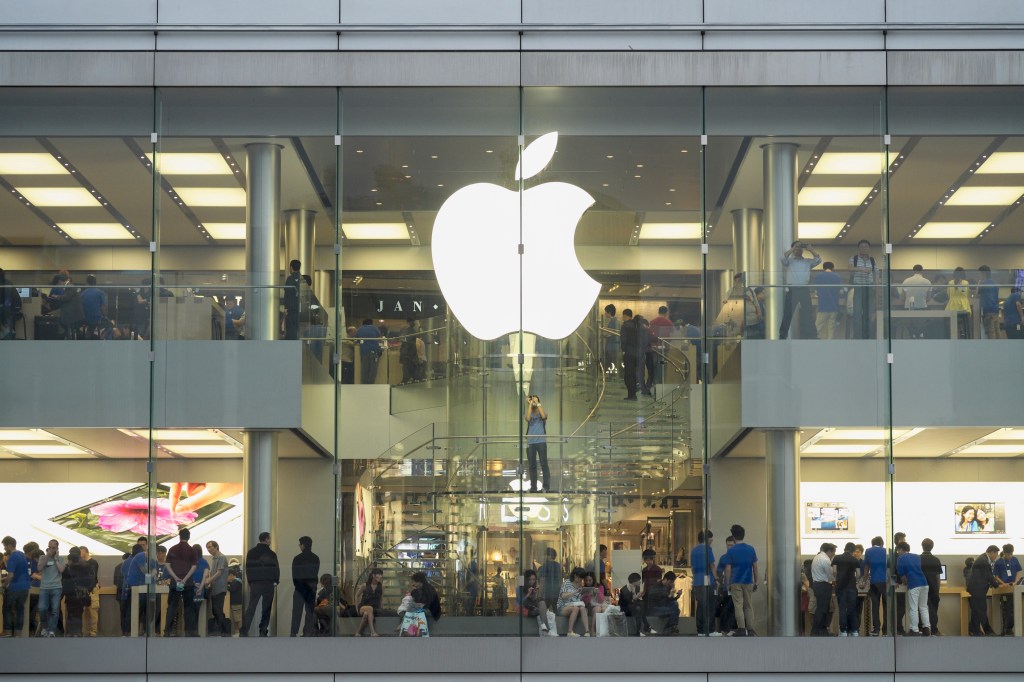
First, though, give yourselves a pat on the back. As a member of the vanguard of new media, next-generation services, and experimental technology, you should feel a certain pride. And I think you’ve also been justified in your various transgressions out here on the frontier — blocking ads, pirating media and software, and misusing or abusing other services (to a point at least) — because you moved faster than the rest of the world and it’s their fault that they didn’t see it coming, or weren’t fast enough to react in time. I don’t want to get all copyfight up in here, but the dinosaurs of media and communications deserve all the flak and failure they’ve piled up. I know it, you know it, they won’t say so but they know it too — but the time for sulking and suing is over. Instead, they’re piling into the wagons and hitting the trail. The latest Wild West on the internet is being clogged with settlers, and, at the risk of allowing this metaphor to overstay its welcome, there’s about to be a new sheriff in town (pictured at right). And the next few years will be the story of how the West was re-won — by corporate interests, as usual. Hey, it had to happen sometime.
Look. The fastest growing mobile platforms in the world are essentially trojan horses for new advertising (Android) and paid content (Apple). DRM is starting, thank god, to assume a form that isn’t instinctively abhorrent to even to the most seasoned of internet users. Digital distribution is no longer looked upon as an aberration, but an opportunity. And this positive change in new advertising is combined with, as Eric Clemons noted back in March, a failure on the part of traditional advertising to engage its audience on any level. Of course, his objections apply equally to a banner ad that’s in your browser as it does to a banner ad that’s on your desktop. Let’s talk about it.
Break yourself
So what can you do? Well, you can change the way you advertise. Ads these days are so bad that anybody who clicks one is guaranteed to be a sucker. And the supply of suckers, birth rates notwithstanding, is decreasing as techsavviness increases (along with AdBlock, torrenting, etc.). Even when you take an ethical stand, like Penny Arcade and others, and only advertise on your site for things you want you readership to support, ads simply won’t do any more. I wonder why? Let’s see. Tell me how most ads these days differ from the following:

(image from here)
Except for the fact that you no longer have to send a piece of mail to a physical address (usually, anyway), it is evident that the bulk of advertising hasn’t changed in 150 years. Interesting, that — and surprising that such a mind-bogglingly backward-looking strategy has survived so long. But luckily for us, advertisers are finally beginning to realize that the internet isn’t just a periodical with infinite pages. Innovators have, over the last four or five years, created a huge, rich playpen for marketers, and unsurprisingly those marketers have largely ignored it. Hence the trouble monetizing such obvious gold mines as Flickr, FaceBook, Twitter, and so on. “How will we make money on Twitter, there’s no place to put our gold-rush-era advertisements for Gammon’s Unctuous Ointment?” Sorry, but change comes from within, people. I don’t want to tell you how to do your job, but if you can’t figure out how to take a hundred million eyeballs a day and turn it into cash, you should reconsider your profession.
That’s why I see all these troublesome embedded ads and sponsored services as non-threatening — even cute in a way. They represent the infancy of new advertising, and stuff like an ad-supported OS or office suite are their first wobbly steps. Photogenic in a way, but be ready to capture the first few falls as well. For instance: Apple’s potential system, while obviously just a rough sketch in more ways than one, has the troubling flowchart box “User pre-buys time?” Yeah, that’s not going to happen. Coin-op computing is not the way to go. Revisit Eric’s article for a few ideas on what is the way to go, but while I have you I’d like to add a few examples I’ve just thought up in the last few minutes, if I may. I doubt I’m the first person to think of these, but I don’t see any of them being implemented widely, so pretend I invented them for the purposes of this post.
Ads that aren’t anachronisms

When you say “ad-supported,” it conjures images of ugly banner ads surrounding the functional portion of the program or service. You and I see it every day in Gmail, after all, and who hasn’t seen worse? Nagware also comes to mind; I used WinRAR for a decade and clicked down its nag screen thousands of times before giving in. But that’s old school. These days, ads are rectangles filled with lies. Nobody clicks on those any more, or if they do, the numbers are decreasing at a rate which must alarm those who fill the rectangles. But what if the ads were to be invisible? Picture this: an OS-wide layer that detects searches, reads text on webpages, and scours all content for products and services. A Snap-esque pop-up or browser bar provides the lowest prices, latest blog posts, and a link to the official site. It provides trackable clickthroughs (bankable) and is, in fact, useful to the user. In a “normal” machine you could turn this off, and in an ad-supported machine you couldn’t (without some work anyway). Sure, it’s not a full solution, but honestly, would you mind having that on your machine if it meant saving a couple hundred bucks up front? Even if you say yes (and I might), I guarantee there are about a hundred million people who would say no. Can you say Wal-Mart? I knew you could. I’d venture to say that this is one of the driving ideas behind Chrome OS.
So that’s a kickoff point for ads in the OS: unavoidable yet unobtrusive, simple yet functional. What about in the browser? It’s more difficult because the user has more control over what they do and don’t see. But the same principles are at work, and at the risk of tooting TechCrunch’s horn, we’re already applying them (and have been before I got here; I’m not claiming any credit). Look down at the bottom of this paragraph. It’s a CrunchBase widget! Useful, embeddable, trackable, and customizable — mark my words, in a year or two these things (not just CrunchBase but similar items) will be everywhere. After all, who says an ad has to be produced by the company making the product? People don’t like those ads anyway. They’re badly designed, and frequently damned lies to boot. But in a CrunchBase or say GDGT embedded widget, you know the source, you don’t have to worry about spin, and it’s no skin off your back if TechCrunch gets a penny whenever you click through to Sony’s site through one. And here’s the fun part: payment, placement, and tracking are virtually identical to traditional ads. Sony doesn’t want to pay a website to advertise for them? Then no links to Sony. Users can figure it out by themselves.
If I’m honest, they should be a bit smaller if they’re to be everywhere. And have more stuff. You get the idea, though. …yeah, it’s me, so what?
But media, Devin, you’re forgetting the media! Billions are spent on television advertising. Or so I’m told — I only see TV ads at the gym and at bars these days, since I download or stream all my media. I’m not boasting of being some elite master pirate and internet jockey; the fact is that tech-savvy people do what I do, or rather I do what they do, because at the moment it’s easier and better. That’s all. And there are more people qualifying as tech-savvy every day. Media companies are realizing that, and TV ads, while not on their way out, are going to have to be heavily augmented with something else. What could it be? What did I say about the other ads — oh yes, unavoidable yet unobtrusive, simple yet functional. Okay, here’s one I just thought up as I typed this sentence. When you stream or download a show, have metadata or an on-screen menu or page (visible during the intro, ads, or whatnot) where you can buy associated items. But not just DVD sets. I mean, if someone’s watching episode 89, they either own episodes 1-60 already or will be buying them sooner or later anyway. You’re trying to sell God to the choir. Why not accessorize? The meta-page I theorize (an enormous advertisement in disguise) can have all manner of things: links to the coffee shop the characters were in. Prices and local availability for the clothes they wore. iTunes link for songs from the soundtrack. Related shows! Related books! Every time you provide an episode for free (if that continues) — with unskippable ad breaks for your regular ads! — you get to expose every viewer to a cornucopia of products that they are probably at least a little interested in. Can you say that about cable? And if you do say it, will people laugh?
How I learned to stop worrying and so on
But I seem to have wandered off from the original topic. Let’s get something straight. The world is already ad-supported. It always was. And it will continue to be. Don’t fight it. It’s like slipping into a warm bath. If Apple puts out an ad-supported version of OS X, or Google Checkout is built into Chrome OS, or Microsoft brings back Clippy to suggest sponsored websites, you can cry all you want, but know that advertising makes the world go round. For a brief, exciting time, you’ve been ahead of the curve, in a land where ad-men feared to tread. You hate advertising, and rightly so, because you’ve been subjected to it in its worst possible guise. For a decade at least, ads have been a lame, decrepit wolf in comically unconvincing sheep’s clothing. That’s changing — and while it’s too little, too late for some (the RIAA and MPAA for two, or their dignity at least), it’s a golden opportunity for others, and it means progress and improvement for the end user.
It’ll take some time, but the coming renaissance in advertising is going to happen whether you like it or not, just as the revolution in communications happened to the advertisers — who decidedly did not like it. They fancied themselves an immovable object, but the truly unstoppable force of progress has since relieved them of that idea. Users have been empowered to choose when, how, and from whom they will accept advertising. The race now is not to the biggest and flashiest ad, as it has been for generations, but to the very opposite end of the spectrum. The winner will be the one who best convinces the user that they are not being advertised to at all. Indeed, we are about to change the very definition of advertisement. Care to help?


Bravo, sir. You deserve a round of applause (or beers).
Among the companies that must be worried most by this patent would be Google.
Apple in the future looks to be the evil of all tech companies. Few points to support my theory:
1) If OS is used to push Ad, then the OS will make use of your info (no privacy – it will analyzes your data from the device hard-drive, your daily activity… no one has better advantage than your OS to report what you are doing in a computer…)
2) Apple devices include for this purpose: mac, iPhone, iPod,… and may be any future electronics…all this will help them to get more insight of people
3) Controlling the gateway to advertisers on apple OS supported devices….pure CONTROL…Google be warned!
….
Anyhow I am just throwing my opinions that where Apple is trying to go with this….
Seems really ugly to me
I am strangely hungry for Subway now.
hahahahahhaha
That was indeed insightful. I am constantly “googling” during videos for information WRT to the content I am viewing. Sometimes it is product related, but also cross referencing and fact checking.
+1 .. nice post.
looks like the trend is making it to the real wolrld with companies like http://www.TShirtAds.com.
Would someone like to sponsor my responses? One six inch sub per reply.
The only thing that worries me is Microsoft using it’s massive market share to push it’s advertising revenues. But this is why we have things like Linux and BSD.. and adblockers.
Great monetization, mail – services like GMX and web.de are doing the same in Europe!
The question that rises is…in the near future will exists non adware softwares to buy?
Anyone who has played Mirrors Edge will know what an ad supported Mac world would look like.
“For instance: Apple’s potential system, while obviously just a rough sketch in more ways than one, has the troubling flowchart box “User pre-buys time?” Yeah, that’s not going to happen. Coin-op computing is not the way to go. ”
Disagree.
Any traveller already ends up, usually, buying metered wifi time with regularity.
Personally, I’d be willing to buy metered time on some apps that I use so very rarely but need once in a while. I don’t want to spend US$600-$1000 for MS Project Professional, but once in a great while I need to use it (usually because someone else only has it and not an alternative). I’d be DELIGHTED to pay for half a day’s use.
Likewise for that clunker Excel on the Mac, on the rare occasion I slip and need to use it.
what if chrome or internet explorer start showing ads? would you migrate to a free-ad browser (FF maybe?), and just get use to?
seems that publicity will always be part of the modern life style.
… hope that more relevant to my preferences and context.
Devin — you may be right. But there is still a huge problem: media is already way abundant while advertisers are still way scarce.
Rather than adding more media inventory, which appears to be your underlining suggestion, what the ecosystem really needs over the next 5 years is hell-of-a-lot more advertisers.
Let’s focus on bringing more advertisers online (especially in local markets) before increasing the content load by 10x and making it more of a commodity than it is.
Nonetheless, thanks for your great analysis and writing, Devin.
Cheers,
Mike
“But there is still a huge problem: media is already way abundant while advertisers are still way scarce.
Rather than adding more media inventory, what the ecosystem really needs over the next 5 years is hell-of-a-lot more advertisers.”
From the stand point of an affiliate network that serves B2B companies, all I can say is “G…, bless Microsoft!” :-)
We have way more advertisers that are looking for additional B2B inventory than publishers that are able to reach this market, and at the same time are willing to risk their a.ses to engage with us utilizing Pay Per Deal model to which advertisers sign up for in a blink of an eye.
Ad supported software for professional audience? All I can say is “give it to me, give me more of it, baby!” :-)
“And the next few years will be the story of how the West was re-won — by corporate interests, as usual. Hey, it had to happen sometime.” – Devin Coldewey
“Live free or die” – Motto of the state of New Hampshire
Devin, you are truly lost, fatally corrupted, your soul eaten by corporate vampires. No, it doesn’t have to happen. Maybe you have no will to freedom, but for the rest of us, we will resist. And at the end of the day, there’s always Free and Open Source. Not as lickable as OS X, but when I can no longer use OS X free from ads, I will return to Linux and FOSS in a heartbeat. Some things are more important than others, as any grownup knows.
Yet you continue to use the internet for information where there’s forced advertising everywhere. You should probably just go back to newspapers or word of mouth.
As long as the software/service is free to users, then it’s perfectly reasonable for there to be ads to support the software/service.
But if I’m paying for something, the ads needs to gtfo.
“Apple had filed a patent for what appears to be an ad-supported version of OS X, my shock abated almost instantly. In fact, I only felt more justified in backing ad-supported products.”
where im from, we call these fanboys.
ok we need such posts back, full of information! and ya funnny..enough of twitter-facebook-apple stream
i don’t own a tv, because of ads …
i would not read techcrunch unless i had adblock …
people underestimate the intrusiveness of ads, and how off-putting they are …
the medium is NOT stronger than the debilitating effect of ads …
I would kill for a six foot now
Lol, I hate lying rectangles!
My moms on the computer, and an ad (I know it’s a bad one) pops up. She goes to click the “X” and I quickly tell her “NO! Don’t click it, even thou-”
*click* What, it’s an exit button, right?
*more ads pop up*
*facepalm*
Concession: ads are here to stay. I’ve known that for quite awhile. No problem here.
Objection: monetization to the extent that ads interfere with my getting around on the web. Search results: purchasable degrees of relevance. What I intend to find, versus what I find first, may to a too-great degree be influenced by money spent by the first-found to be found first.
I remain unconvinced that it’s a good thing for ads to be everywhere they possibly can be. What’s so great about that for anyone but advertisers?
Isn’t this a repeat of the late 1990’s when all of the ad-supported free-pcs were coming out.
Glad subway is trying some social media marketing! Its my favourite sandwich brand!
Real talk, if you have a website or product with some cool content on it (ex. An article like this.) and the writer took the time to put it together and I enjoyed it. If you have some click ads on the page I’m going to click away. It’s only right. I look at click ads like donating… with other people’s money.