
The Latest
Welcome to TechCrunch Fintech! This week, we’re looking at the continued fallout from Synapse’s bankruptcy, how Layer wants to disrupt SMB accounting, and much more! To get a roundup of…

The company is hoping to produce electricity at $13 per megawatt hour, which would be more than 50% cheaper than traditional onshore wind.

Generative AI makes stuff up. It can be biased. Sometimes, it spits out toxic text. So can it be “safe”? Rick Caccia, the CEO of WitnessAI, believes it can. “Securing…

It’s not often that you hear about a seed round above $10 million. H, a startup based in Paris and previously known as Holistic AI, has announced a $220 million…

Gaming
TechCrunch Minute: Adobe lodges branding complaint against indie emulator app, Delta
9:00 AM PDT • May 21, 2024
It’s been a wild few months for the developers behind Delta, a retro game emulator app. Their latest hiccup came when Adobe accused the app…

Hey there, Series A to B startups with $35 million or less in funding — we’ve got an exciting opportunity that’s tailor-made for your growth journey! If you’re looking to…

TikTok is pulling out all the stops to prevent its impending ban in the United States. Aside from initiating legal challenges against the government, that means shaping up its public…

Microsoft wants to make its brand of generative AI more useful for teams — specifically teams across corporations and large enterprise organizations. This morning at its annual Build dev conference,…

GitHub Copilot gets extensions
2 hours ago
Build is Microsoft’s largest developer conference and of course, it’s all about AI this year. So it’s no surprise that GitHub’s Copilot, GitHub’s “AI pair programming tool,” is taking center…
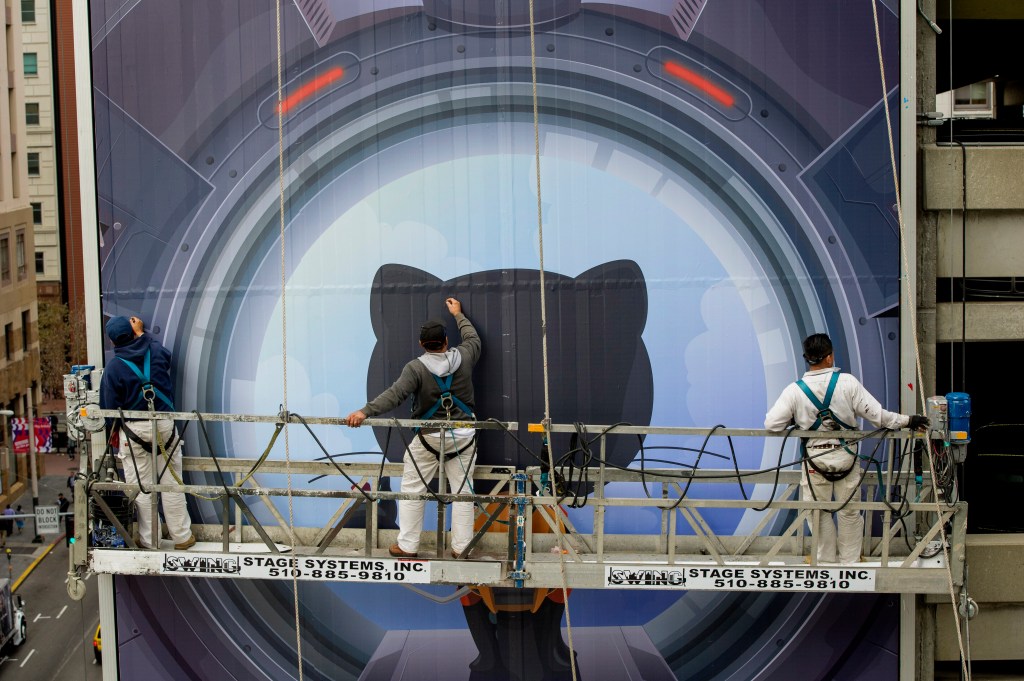
Microsoft wants to put its Copilot everywhere. It’s only a matter of time before Microsoft renames its annual Build developer conference to Microsoft Copilot. Hopefully, some of those upcoming events…

Where we’ll be next
Oct 28th
TechCrunch Disrupt 2024
San Francisco, CA
Jun 11th
StrictlyVC – Washington, D.C.
Washington, D.C.
May 21st
StrictlyVC – London
London
Microsoft’s big focus at this year’s Build conference is generative AI. And to that end, the tech giant announced a series of updates to its platforms for building generative AI-powered…

AI
UK data protection watchdog ends privacy probe of Snap’s GenAI chatbot, but warns industry
2 hours ago
The UK’s data protection watchdog has closed an almost year-long investigation of Snap’s AI chatbot, My AI — saying it’s satisfied the social media firm has addressed concerns about risks…

U.S. cell carrier Patriot Mobile experienced a data breach that included subscribers’ personal information, including full names, email addresses, home zip codes, and account PINs, TechCrunch has learned. Patriot Mobile,…

It’s been three years since Spotify acquired live audio startup Betty Labs, and yet the music streaming service isn’t leveraging the technology to its fullest potential—at least not in our…

Alchemist Accelerator has a new pile of AI-forward companies demoing their wares today, if you care to watch, and the program itself is making some international moves into Tokyo and…

“Late Pledge” allows campaign creators to continue collecting money even after the campaign has closed.

Stack AI’s co-founders, Antoni Rosinol and Bernardo Aceituno, were PhD students at MIT wrapping up their degrees in 2022 just as large language models were becoming more mainstream. ChatGPT would…

Young geothermal energy wells can be like budding prodigies, each brimming with potential to outshine their peers. But like people, most decline with age. In California, for example, the amount…

Pinecone, the vector database startup founded by Edo Liberty, the former head of Amazon’s AI Labs, has long been at the forefront of helping businesses augment large language models (LLMs)…

Adobe says the feature is up to the task, regardless of how complex of a background the object is set against.
