The Latest
Adobe says the feature is up to the task, regardless of how complex of a background the object is set against.

The market play is clear from the outset: The $449 headphones are firmly targeted at an audience that would otherwise be purchasing the Bose QC Ultra or Apple AirPods Max.

Young geothermal energy wells can be like budding prodigies, each brimming with potential to outshine their peers. But like people, most decline with age. In California, for example, the amount…

Pinecone, the vector database startup founded by Edo Liberty, the former head of Amazon’s AI Labs, has long been at the forefront of helping businesses augment large language models (LLMs)…

All cars suffer when the mercury drops, but electric vehicles suffer more than most as heaters draw more power and batteries charge more slowly as the liquid electrolyte inside thickens.…

Scale AI has raised a $1 billion Series F round from a slew of big-name institutional and corporate investors including Amazon and Meta.

The new coalition, Tech Against Scams, will work together to find ways to fight back against the tools used by scammers and to better educate the public against financial scams.

It’s a wrap: European Union lawmakers have given the final approval to set up the bloc’s flagship, risk-based regulations for artificial intelligence.

Fintech
Vitesse, a payments and treasury management platform for insurers, raises $93M to fuel US expansion
4 hours ago
London-based fintech Vitesse has closed a $93 million Series C round of funding led by investment giant KKR.

Startups
Zen Educate raises $37M and acquires Aquinas Education as it tries to address the teacher shortage
9 hours ago
Zen Educate, an online marketplace that connects schools with teachers, has raised $37 million in a Series B round of funding. The raise comes amid a growing teacher shortage crisis…

Where we’ll be next
Oct 28th
TechCrunch Disrupt 2024
San Francisco, CA
Jun 11th
StrictlyVC – Washington, D.C.
Washington, D.C.
May 21st
StrictlyVC – London
London
“When I heard the released demo, I was shocked, angered and in disbelief that Mr. Altman would pursue a voice that sounded so eerily similar to mine.”

Transportation
Aurora and Volvo unveil self-driving truck designed for a driverless future
12 hours ago
A new self-driving truck — manufactured by Volvo and loaded with autonomous vehicle tech developed by Aurora Innovation — could be on public highways as early as this summer. The…

Climate
ETF Partners raises €285M for climate startups that will be effective quickly — not 20 years down the road
13 hours ago
The European venture capital firm raised its fourth fund as fund as climate tech “comes of age.”

Copilot, Microsoft’s brand of generative AI, will soon be far more deeply integrated into the Windows 11 experience.

Hello and welcome back to TechCrunch Space. For those who haven’t heard, the first crewed launch of Boeing’s Starliner capsule has been pushed back yet again to no earlier than…

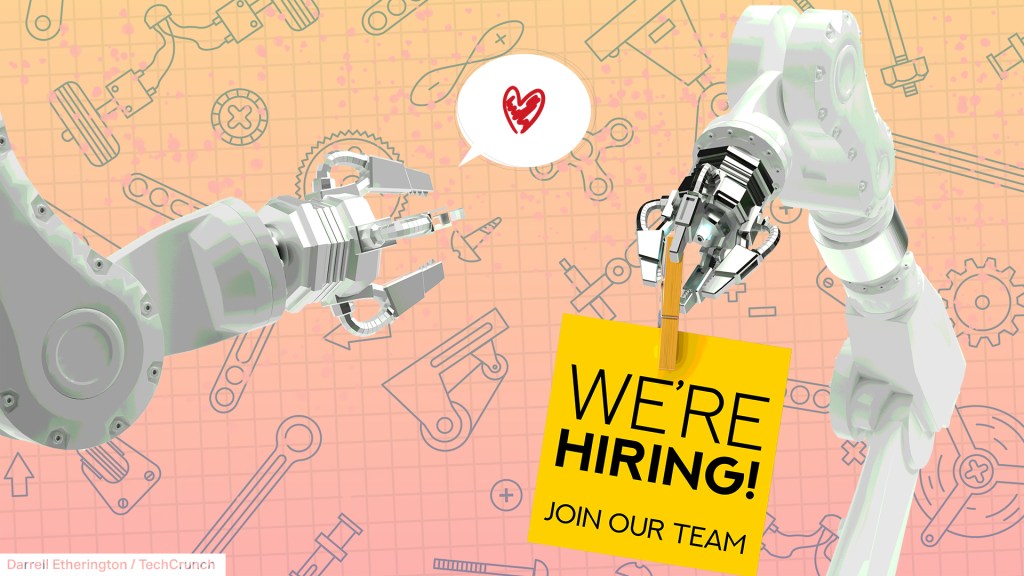
When I attended Automate in Chicago a few weeks back, multiple people thanked me for TechCrunch’s semi-regular robotics job report. It’s always edifying to get that feedback in person. While…
Transportation
VinFast crash that killed family of four now under federal investigation
16 hours ago
The top vehicle safety regulator in the U.S. has launched a formal probe into an April crash involving the all-electric VinFast VF8 SUV that claimed the lives of a family…

Media & Entertainment
NYC-Dublin real-time video portal reopens with some fixes to prevent inappropriate behavior
16 hours ago
When putting a video portal in a public park in the middle of New York City, some inappropriate behavior will likely occur. The Portal, the vision of Lithuanian artist and…

Contour Venture Partners, an early investor in Datadog and Movable Ink, lowers the target for its fifth fund
17 hours ago
Longtime New York-based seed investor, Contour Venture Partners, is making progress on its latest flagship fund after lowering its target. The firm closed on $42 million, raised from 64 backers,…

Meta’s Oversight Board has now extended its scope to include the company’s newest platform, Instagram Threads, and has begun hearing cases from Threads.